Traceability is the product.
In aerospace supply, the part and its paperwork are one object. RMXAEROSPACE supplies components, rotables, consumables and ground support equipment to operators, MROs and government fleets, each item moving with its release certification, origin, condition and history intact.
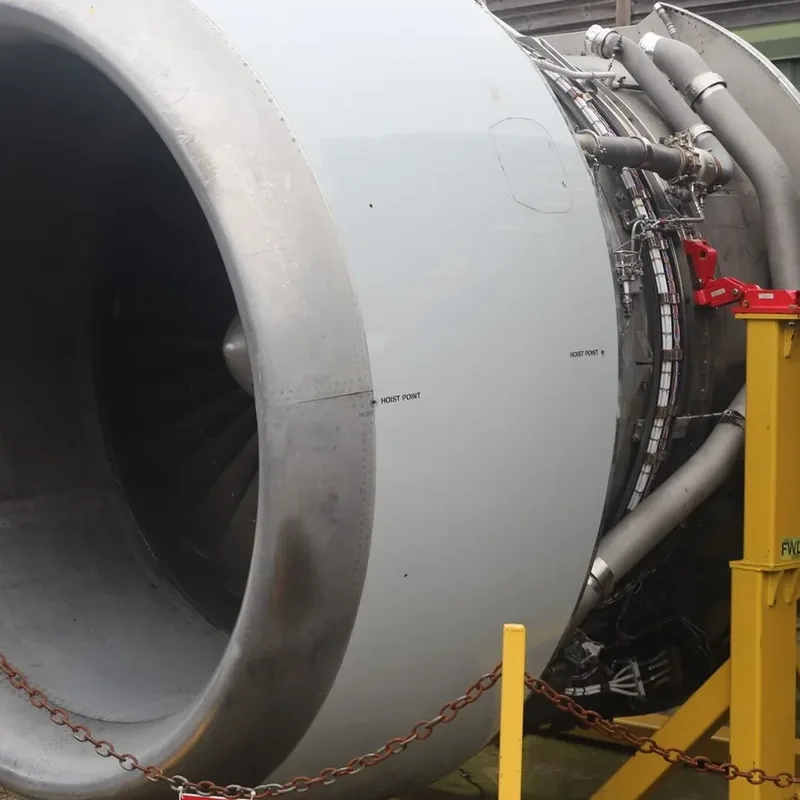 Powerplants and components, full trace · Illustrative
Why documentation discipline decides this industry.
An aircraft part without its release certificate is scrap metal at any price. Civil aviation runs on documentary trust: parts enter service only with an authorised release certificate, FAA Form 8130-3, EASA Form 1 or their national equivalents, and life-limited parts carry traceability across their entire service history. A missing document does not discount a part. It disqualifies it.
The commercial stakes compound daily. An aircraft on ground bleeds revenue, crew cost and schedule integrity for every hour a part is missing; industry experience puts the cost of a grounded widebody in the hundreds of thousands of dollars per day once recovery, re-accommodation and knock-on disruption are counted. At the other end of the cycle, lease redeliveries are won and lost on records completeness, and ageing fleets push operators into obsolescence management as original manufacturers exit part numbers.
This is the terrain RMXAEROSPACE is built for: a supply discipline in which the certificate is checked before the price, unapproved parts are a screening problem rather than a scandal, and every shipment can stand in front of an auditor, a lessor or a regulator without preparation.
What moves through the business.
Rotables and Repairables
Serialised, trace-documented units for airframe and engine: sourced, exchanged or loaned, with condition and tag status stated plainly.
Expendables and Consumables
Hardware, seals, filters, chemicals and shop consumables under shelf-life, batch and storage-condition control.
Engine Material
Engine parts and modules with back-to-birth trace where applicable, supporting shop visits and material planning.
Ground Support Equipment
Tooling and GSE for line and base operations, from standard equipment to programme-specific procurement.
AOG Response
Aircraft-on-ground sourcing run as an execution drill: locate, verify documentation, quote, move, evidence delivery.
Obsolescence and Last-Time-Buy
Managing end-of-life part numbers: alternates, PMA options where accepted, last-time-buy planning and stock strategy.
Audit-standard supply, in practice.
Certificate before price
Release documentation, origin and condition are verified before commercial terms are discussed. A part that cannot be evidenced is not offered.
Unapproved-parts screening
Supplier vetting, documentation cross-checks and inspection routines directed at the industry's known integrity risks.
Storage and handling control
Shelf-life, ESD and environmental requirements respected through the chain, so condition on paper matches condition in the box.
Export control and screening
Jurisdictional export requirements and counterparty screening run before commitment, on every transaction.
Records that survive scrutiny
Transaction files structured for operators' quality systems, lessor redelivery reviews and regulator audits alike.
Six client worlds, one standard.
Airlines and cargo operators
Scheduled fleets supported on AOG, check material and contract supply.
Business and VIP operators
Low-volume, high-consequence fleets where dispatch reliability is reputation, served jointly with RMXAIR.
Government and special-mission fleets
State aircraft sustained with export-compliant, fully documented supply.
MRO organisations
Line and base maintenance providers supplied to programme-level arrangements.
Lessors and asset managers
Material and records support where asset value is a documentation question.
Defence-adjacent industrial
Authorised institutional programmes, coordinated with RMXDEFENCE under strict controls.
Stated plainly.
RMXAEROSPACE trades under licensed aircraft spare parts and components activity, sourcing through OEM, distributor and approved-supplier channels. Certification claims are made only where supported by documentation held on file. [CLAIM REQUIRES VERIFICATION for any OEM authorisation before publication.]
Three ways the business is engaged.
Advisory and Structuring
Requirement definition, feasibility, counterparty selection and structure design, before any commitment is made.
Programme Coordination
End-to-end coordination of suppliers, partners, finance, logistics and compliance through to verified delivery.
Long-Term Mandates
Multi-year supply, support or development programmes with defined governance, reporting and review.
Every engagement carries the RMX standard: sanctions and end-user screening before commitment, documentation to audit level, responsibility assigned by name, and completion that is verified rather than announced.
Three ways the business is engaged.
Advisory and Structuring
Requirement definition, feasibility, counterparty selection and structure design, before any commitment is made.
Programme Coordination
End-to-end coordination of suppliers, partners, finance, logistics and compliance through to verified delivery.
Long-Term Mandates
Multi-year supply, support or development programmes with defined governance, reporting and review.
Every engagement carries the RMX standard: sanctions and end-user screening before commitment, documentation to audit level, responsibility assigned by name, and completion that is verified rather than announced.
The shape of the work.
An operator has an aircraft on ground and hours to solve it. An MRO needs rotables with unbroken trace. A government fleet needs consumables supplied on contract, to audit standard, for years.
These are requirement patterns the business is built for, stated as patterns. Specific engagements, past or present, are not published; references are provided under confidentiality where appropriate.
Where this mandate connects.
RMXAEROSPACE is not an original equipment manufacturer unless expressly identified and does not imply authorisation by any manufacturer through reference to a product or platform. Controlled items are subject to licensing, sanctions, export controls, end-user verification and government approval.